Email: sales1@yzconn.com Tel: +86-21-64128668
- All
- Product Name
- Product Keyword
- Product Model
- Product Summary
- Product Description
- Multi Field Search

Views: 0 Author: Site Editor Publish Time: 2026-06-08 Origin: Site


Impedance mismatch stands as the most common point of failure in modern RF system deployments. Using the wrong cable does not merely degrade your signal quality. In transmitting applications, it can permanently damage expensive amplifier hardware. Coaxial cable impedance, measured in Ohms, is often misunderstood by technicians. It has nothing to do with standard DC resistance. Instead, it defines the critical relationship between voltage and current as high-frequency AC signals travel down the line.
We created this technical buying guide to help engineers and procurement managers evaluate the right 50 ohm vs 75 ohm RF cable for their specific network architecture. By understanding the core physical differences between these standards, you can specify components accurately. You will learn how to match transmission lines to device outputs, preserve signal integrity, and avoid costly rollout mistakes.
50 Ohm = Power & Two-Way Communication: The industry standard for transmitting RF signals (cellular, Wi-Fi, radio) where maximum power handling is the priority.
75 Ohm = Minimal Signal Loss: The standard for receive-only and high-fidelity signals (video, CATV, consumer cellular boosters) where preserving weak signals over distance is critical.
Mismatch Risks: Connecting a 50 Ohm cable to a 75 Ohm device creates a 1.5:1 Voltage Standing Wave Ratio (VSWR), resulting in signal reflection that can overheat transmitting amplifiers.
Sourcing Matters: For commercial deployments, partnering with a reliable RF cable manufacturer ensures exact tolerance control and connector matching.
To understand why these two specific impedance values dominate the industry, we must look at historical physics experiments. Back in 1929, researchers at Bell Labs conducted extensive tests on coaxial transmission lines. They wanted to find the perfect physical dimensions for sending radio frequency signals over long distances. They discovered a fascinating physical trade-off that established our modern standards.
They found that maximum power handling occurs when the cable impedance sits at approximately 30 Ohms. At this level, the transmission line can handle massive amounts of voltage without internal arcing. However, minimal signal attenuation occurs at approximately 77 Ohms. At 77 Ohms, the signal experiences the lowest possible insertion loss over distance. You physically cannot achieve maximum power handling and minimum signal loss in the exact same cable geometry.
The 50 Ohm standard emerged as an engineering compromise. It sits roughly in the middle of 30 Ohms and 77 Ohms. This makes it an ideal middle ground. It handles high transmission power efficiently while keeping signal attenuation at acceptable levels. Engineers adopted it globally for two-way communication systems.
The 75 Ohm standard was optimized purely for the lowest possible signal attenuation. Because 77 Ohms is an awkward number for standard wire gauges and dielectric materials, engineers rounded it to 75 Ohms. They use this standard exclusively when power handling is not a factor. If a system only needs to receive a weak signal, 75 Ohms preserves that delicate data beautifully.
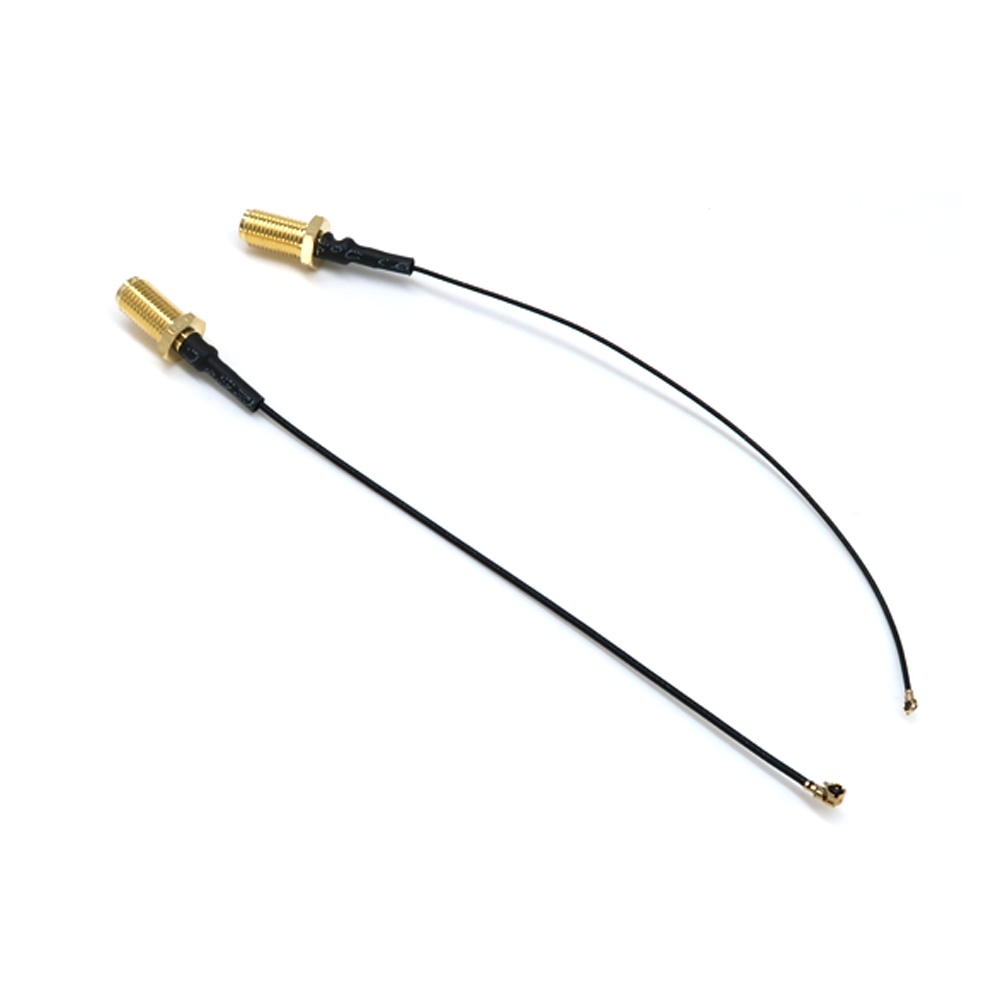
The primary function of a 50 Ohm coaxial cable is two-way communication. It excels at transmitting data and raw RF power simultaneously. Because it represents a compromise between voltage handling and signal loss, it dominates commercial wireless industries. Whenever a device actively broadcasts a signal outward, you will almost certainly find 50 Ohm architecture behind it.
We see 50 Ohm cables deployed most frequently in the following common use cases:
Commercial Distributed Antenna Systems (DAS): Large indoor networks require cables capable of pushing wattage to multiple broadcasting nodes.
Wi-Fi Networks and WLAN Antennas: Enterprise routers rely on 50 Ohm lines to broadcast robust 2.4GHz and 5GHz signals across open spaces.
VHF/UHF Land Mobile Radio (LMR): Emergency responders, police networks, and amateur radio operators use these cables to handle powerful two-way radio transmissions.
Test and Measurement Equipment: Oscilloscopes and spectrum analyzers use 50 Ohm lines to ensure laboratory-grade consistency across high-frequency measurements.
Engineers rely on several common 50 Ohm cable types for these applications. RG-58 provides high flexibility for short jumper connections. RG-174 works perfectly inside tight device enclosures. RG-213 offers thick shielding for high-power outdoor runs. LMR-400 stands as the modern premium standard for low-loss cellular deployments. Standard connectors for these cables include SMA, N-Type, and 50-Ohm BNC formats.
You must follow one bottom-line rule. If your system actively transmits a signal of significant wattage, 50 Ohm is mandatory. Relying on anything else risks catastrophic equipment burnout and severe network failure.
The primary function of a 75 Ohm cable is high-efficiency receiving. It specializes in transferring audio, video, and micro-data signals over long physical distances. Because engineers designed it purely to minimize attenuation, it serves as the backbone of the broadcast television and internet provider industries. It keeps weak incoming signals intact as they travel from neighborhood nodes into individual buildings.
You will encounter 75 Ohm systems in these core use cases:
Broadband Internet (DOCSIS) and Cable TV (CATV): Internet service providers run miles of 75 Ohm cable to deliver data without active amplification at every pole.
Broadcast Television Antennas: Rooftop TV antennas use these lines to pull faint, micro-volt signals from the air and push them down to receivers.
CCTV Camera Systems: Analog security networks use them to transmit raw video feeds back to central DVR units without ghosting or static.
Consumer-Grade Signal Boosters: Many residential cell boosters intentionally use 75 Ohm impedance. This allows homeowners to utilize pre-existing television wiring hidden inside their walls.
The most common 75 Ohm cable types include RG-59, RG-6, and RG-11. RG-59 handles short analog video runs. RG-6 serves as the absolute standard for modern residential internet and television installations. RG-11 provides a much thicker core for long underground backbone runs. Standard connectors almost exclusively include the F-Type connector and the 75-Ohm BNC connector.
The bottom-line rule here is equally strict. If your system is entirely receive-only, or if it relies on preserving a tiny micro-signal over a long run, 75 Ohm is the superior engineering choice.
Specification | 50 Ohm Cable | 75 Ohm Cable |
|---|---|---|
Primary Focus | Maximum power handling | Minimum signal attenuation |
Core Application | Two-way transmitting (Wi-Fi, Radio) | Receive-only (TV, Broadband) |
Typical Connectors | N-Type, SMA, 50-Ohm BNC | F-Type, 75-Ohm BNC |
Common Cable Models | LMR-400, RG-58, RG-213 | RG-6, RG-11, RG-59 |
Many novice installers assume coaxial cables are universally interchangeable. They plug an available TV cable into a commercial cellular router to save time. This creates a severe physical problem known as impedance mismatch. We must examine the real-world consequences of mixing these components.
When you connect a 50 Ohm line to a 75 Ohm device port, the physics of the wave change abruptly at the connection point. This impedance boundary creates a Voltage Standing Wave Ratio (VSWR) of 1.5:1. You can think of this boundary like a glass window. Most light passes through the glass, but some light reflects backward into your eyes. Similarly, the VSWR reflects RF energy back down the line toward the source.
We can quantify this loss clearly. A 1.5:1 VSWR reflects approximately 4% of the signal power back to the origin. This translates to roughly a 0.177 dB insertion loss. The practical impact of this specific loss depends entirely on your application environment.
In a receive-only scenario, this mismatch carries low risk. If you use a 50 Ohm cable to connect a TV antenna, you lose 0.177 dB of the incoming broadcast. The human eye cannot detect a 0.177 dB degradation in video quality. The system will likely function fine, even if it operates inefficiently.
However, in a transmitting scenario, this mismatch carries extreme risk. Imagine a 50-watt land mobile radio transmitter. If 4% of that massive power reflects backward, the radio's amplifier must absorb it. The amplifier turns this reflected energy into excess heat. Over sustained transmission periods, this cascading heat degrades the internal transistors. Eventually, it permanently destroys the expensive transmission hardware.
Beyond electrical failure, you face serious physical connector damage risks. A standard 50-Ohm BNC connector has a noticeably thicker center pin. A 75-Ohm BNC port expects a thinner pin. If you physically force a 50 Ohm connector onto a 75 Ohm port, you will permanently stretch and destroy the delicate female center receptacle. The port will never grip a correct cable tightly again.
To prevent expensive hardware failures, you must implement a strict decision framework before finalizing your Bill of Materials (BOM). Selecting the right coaxial line requires careful alignment between your hardware inputs, your environmental needs, and your manufacturing partners. We recommend following these four core evaluation steps.
Verify Hardware Alignment: This remains the absolute golden rule of RF design. You must match your cable directly to your device's specified input and output impedance. Never guess. Pull the official specification sheets for your antennas, routers, and amplifiers before ordering wire. If the radio specifies 50 Ohms, you buy 50 Ohms.
Evaluate Performance Data: When navigating a broad RF cable product range, you must demand transparent testing data. Look for vendors who provide clear sweep testing graphs. You need to see the exact Return Loss and Insertion Loss values at your specific operating frequency. A cable performing well at 900 MHz might fail entirely at 5 GHz.
Eliminate Weak Points: Standard off-the-shelf cables often introduce hidden fail points. Retail adapters add up to 0.5 dB of loss per connection. Cheap crimps pull apart under tension. Instead, you should choose a custom RF cable assembly for commercial deployments. Custom builds guarantee exact lengths, which eliminates excess coiled wire and reduces overall attenuation. They also allow you to specify exact jacket types, like Plenum or LSZH, ensuring strict fire code compliance.
Audit Your Supply Chain: Finding a reliable partner is just as critical as finding the right wire. When choosing an RF cable manufacturer, you must outline strict buying criteria. Look for verified ISO certifications. Ask about their internal PIM (Passive Intermodulation) testing capabilities. Ensure they offer reasonable lead times and direct engineering support for custom tooling requirements.
By enforcing these standard operating procedures, your procurement team will eliminate compatibility guesswork. You will protect your expensive radio hardware and maximize your long-term network efficiency.
Understanding transmission line impedance ensures your network operates safely and efficiently. Neither impedance standard is inherently better than the other. They simply serve different physics requirements. The 50 Ohm standard successfully solves for high power and two-way transmission. The 75 Ohm standard successfully solves for minimal signal attenuation in receive-only environments. Mixing them invites unnecessary signal reflection and serious hardware damage.
Your immediate next step should be a comprehensive hardware audit. Advise your deployment engineers to verify all equipment specifications before finalizing any purchase orders. Reviewing antenna datasheets today saves thousands of dollars in blown amplifiers tomorrow. Do not let a minor cable oversight derail a major infrastructure rollout.
If you face unique frequency challenges or harsh installation environments, generic wire will not suffice. We highly encourage you to consult directly with our engineering team. We can help you design, test, and quote a custom RF cable assembly tailored to your exact frequency and impedance requirements.
A: You can only do this if the cellular booster is specifically designed with 75 Ohm F-connectors. Manufacturers often build consumer-grade kits this way so homeowners can use existing TV wiring. However, commercial 50 Ohm boosters require strict 50 Ohm cable runs. Mixing them causes a harsh impedance mismatch, creates unwanted signal reflection, and risks permanent amplifier failure.
A: The most reliable method is reading the printed text on the outer jacket. A jacket stamped with RG-6 indicates 75 Ohms, while LMR-400 indicates 50 Ohms. Visually, 50 Ohm cables generally feature thicker center conductors relative to their surrounding white dielectric foam. However, visual inspection remains error-prone. Reading the jacket print or measuring with specialized RF equipment is the only definitive method.
A: Adapters known as impedance matching pads, or transformers, can physically resolve the mismatch between standard ports. However, they introduce significant negative side effects. These matching pads often introduce their own severe insertion loss, sometimes dropping the signal by 5 to 6 dB across the connection point. It is always better engineering practice to use the correct matching cable natively.


